The Pasadena Police Department
Enforcing civic order in a city full of genius minds.

PPD · Public domain
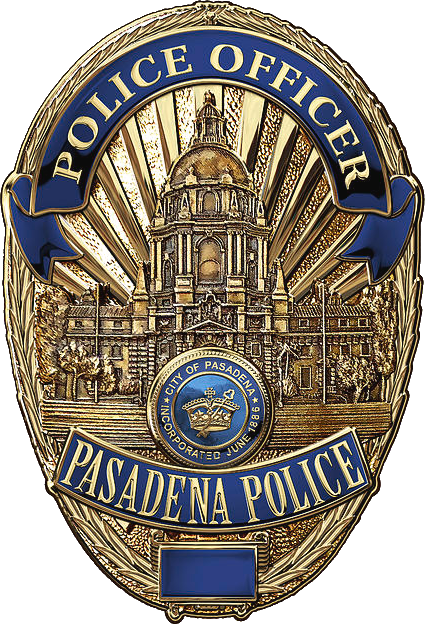
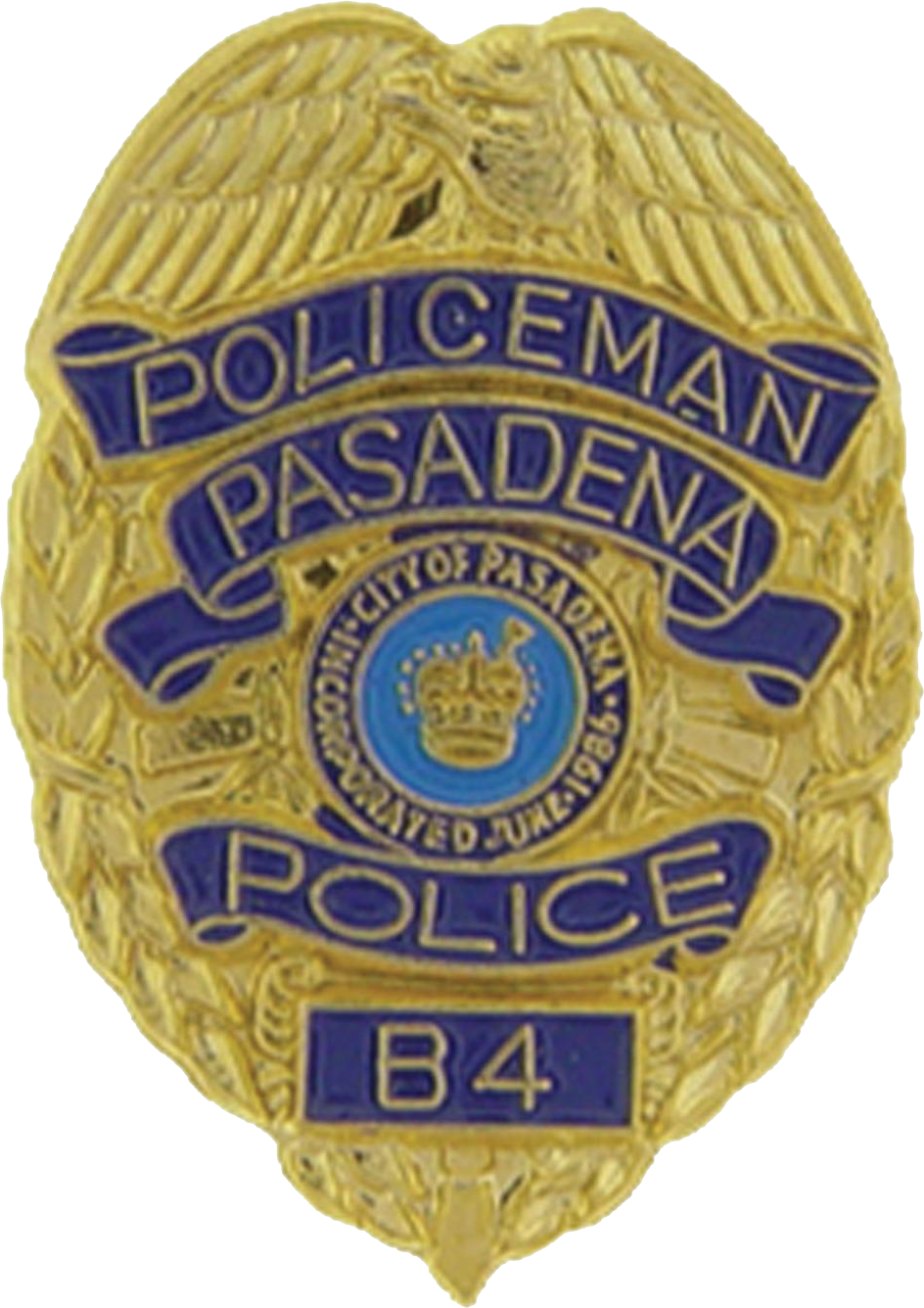
The Pasadena Police Department serves as the primary law enforcement agency within the city of Pasadena, California, where the majority of The Big Bang Theory takes place. While not a central group in the narrative, officers from this department frequently intersect with the main cast during moments of domestic dispute, minor infractions, or emergencies involving their unique lifestyles. Their presence underscores the contrast between the eccentric scientific world of Caltech and the mundane realities of civic order.
- Location
- Pasadena, California
- Jurisdiction
- City of Pasadena Limits
- Affiliation
- Local Law Enforcement
- Status
- Active
- Role
- Public Safety and Order
- Notable Interactions
- Apartment 4A/4B Calls
Lore & Background
The department operates within the same civic framework that supports Caltech, meaning they occasionally deal with incidents originating from university grounds or nearby residential complexes. While they do not possess specialized knowledge in theoretical physics, their routine patrols and emergency responses provide a backdrop for several plotlines involving legal trouble or community safety. The dynamic often involves the characters attempting to explain complex concepts to officers who simply want to resolve a situation quickly.
In Their Own Story
The siren wailed softly down the quiet Pasadena street, cutting through the hum of the air conditioning units outside Apartment 4A. An officer stepped out of the cruiser, badge glinting under the porch light, clipboard in hand. He wasn't here for a robbery or a chase; he was responding to a disturbance involving a laser pointer and a very concerned neighbor. The door opened slowly, revealing a man in a t-shirt explaining that his experiment required absolute silence. The officer sighed, pen hovering over the pad, knowing this would be another ticket written on paper that made no sense.
Reader's Guide
The Pasadena Police Department functions as the standard authority figure within the show's setting, representing the law and order of the real world colliding with the characters' intellectual bubbles. Their primary goal is maintaining safety in a city known for its high concentration of scientists and engineers. Members include various patrol officers who rotate through shifts responding to calls from the apartment complex where Leonard, Sheldon, Penny, Howard, and Raj reside. They are not antagonists but rather procedural obstacles or helpers depending on the nature of the call. Their role in the conflict is usually minor, serving as a mechanism for external pressure on the characters. When they appear, it often forces the group to confront societal norms, legal boundaries, or their own lack of common sense regarding everyday laws.
Did You Know?
- The department serves the city where Caltech is located, placing them in close proximity to the main cast's workplace.
- Officers frequently respond to calls originating from the apartment building on East Washington Street.
- Their interactions often highlight the difference between scientific logic and legal procedure.
Franchise Evolution and Spinoff Strategy
The Big Bang Theory universe began as a multi-camera sitcom created by Chuck Lorre and Bill Prady, premiering on CBS in late 2007. Running for over a decade until May 2019, the original series established a foundation that allowed for significant expansion through spin-offs. The franchise evolved with Young Sheldon, a single-camera prequel launched in 2017 that ran until May 2024, exploring the childhood of the titular physicist in East Texas. This was followed by Georgie & Mandy's First Marriage, a multi-cam sequel to the prequel that debuted in October 2024. Furthermore, the universe is set to expand again with Stuart Fails to Save the Universe, a fourth series focusing on comic book store owner Stuart Bloom alongside Denise and Bert Kibbler. This strategy demonstrates a unique approach to longevity, transitioning from the original ensemble to character-specific narratives while maintaining continuity across different production styles.
Core Ensemble and Character Dynamics
The narrative initially revolves around five central figures living in Pasadena: physicists Leonard Hofstadter and Sheldon Cooper, their neighbor Penny, aerospace engineer Howard Wolowitz, and astrophysicist Raj Koothrappali. As the series progressed, the core group expanded to include prominent supporting characters who were elevated to starring roles, such as neuroscientist Amy Farrah Fowler, microbiologist Bernadette Rostenkowski-Wolowitz, physicist Leslie Winkle, and comic shop proprietor Stuart Bloom. The show also integrated numerous recurring figures, including family members and colleagues, while occasionally featuring celebrity cameos like Stephen Hawking playing himself. This dynamic cast structure allowed the writers to explore diverse relationship arcs, from romantic entanglements between Leonard and Penny to the professional rivalries and friendships among the scientists.
Sheldon Cooper: Origins and Psychological Profile
Sheldon Lee Cooper stands as the franchise's most complex character, defined by his extraordinary intellect and rigid behavioral patterns. Born in East Texas as a child prodigy, he earned his PhD at age sixteen from Caltech and possesses an IQ of 187 with eidetic memory. His personality is characterized by coldness, self-centeredness, and a superiority complex, often manifesting through obsessive-compulsive rituals like knocking three times on doors. Despite these social deficits, he harbors deep care for his friends and family. The prequel series Young Sheldon reveals the origins of his interests in science fiction, trains, and comic books while depicting his life as a nine-year-old high school student living with his mother Mary, father George Sr., twin sister Missy, brother Georgie, and grandmother Meemaw. Jim Parsons narrates this origin story and reprised his role for the finale.
Leonard Hofstadter: The Grounded Counterpart
Leonard Leakey Hofstadter serves as the relatable anchor within the group of high-functioning individuals. An experimental physicist with an IQ of 173, he earned his PhD at age twenty-four after attending Princeton University. Unlike his eccentric roommate Sheldon, Leonard is socially adept and successful in romantic relationships, eventually marrying Penny and expecting a child by the series finale. He hails from New Jersey and comes from a highly accomplished family; his mother is a world-renowned psychiatrist with whom he shares a strained bond, while his father is an anthropologist and his siblings are also professionals in law and medicine. His character arc spans twelve seasons of the original show, where he balances his scientific career with personal growth. He even made a brief non-speaking cameo as a child in Young Sheldon, portrayed by Isaac Harger, linking the two timelines visually.
Gallery




More in Factions & Groups
Elsewhere in the The Big Bang Theory universe
Spotted an error? Know more?
This is a living reference — every entry is fact-audited, and reader corrections feed straight into our audit queue. Suggest an edit · See this site's audit record